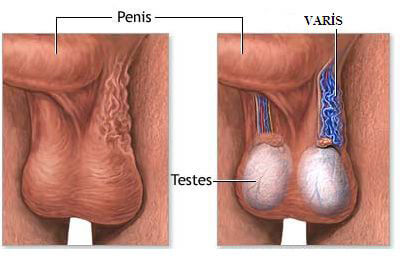
Does Varicocele Cause Infertility? Essentials of Microsurgical Varicocelectomy

When investigating the etiology of male factor infertility, varicocele is the most frequently encountered clinical finding. Although it is present in approximately 20% of the general male population, this prevalence rises to nearly 40% among men presenting with primary infertility. So, how does varicocele—defined as the dilatation of scrotal veins—impair fertility, and what is the definitive management?
What is Varicocele and What is the Etiology?
In medical terminology, a varicocele is the abnormal dilatation and tortuosity of the pampiniform plexus veins that drain the testicle. It is predominantly observed on the left side due to anatomical factors. This dilatation results from valvular incompetence within the spermatic veins, causing retrograde blood flow (reflux) and venous stasis around the testis.
Does Varicocele Cause Infertility?
Yes, untreated high-grade varicocele can lead to infertility. However, not every patient with varicocele is infertile. There are three primary pathophysiological mechanisms through which varicocele adversely affects spermatogenesis:
Scrotal Hyperthermia: For optimal spermatogenesis, testicular temperature must be 1-2°C lower than the core body temperature. Venous stasis elevates scrotal temperature, thereby impairing sperm production.
Reflux of Renal Metabolites: The retrograde flow allows toxic metabolites from the kidney and adrenal glands to accumulate in the testicular tissue, potentially causing sperm DNA fragmentation.
Oxidative Stress: Hypoxia and accumulation of reactive oxygen species (ROS) negatively impact sperm motility and morphology.
The Gold Standard in Treatment: Microsurgical Varicocelectomy
Pharmacological treatment provides no curative benefit for varicocele; surgical intervention is the only definitive solution. Currently, the method accepted by medical literature as the safest and most effective is Microsurgical Varicocelectomy.
Advantages of the Microsurgical Approach Unlike conventional macroscopic surgery, this procedure is performed under an operating microscope, allowing the surgeon to visualize the structures at 10-15x magnification.
Preservation of the Testicular Artery: The risk of accidental ligation of the testicular artery is virtually eliminated due to superior visualization.
Preservation of Lymphatics: Since lymphatic vessels can be clearly identified and preserved, the postoperative complication rate of hydrocele formation is significantly minimized.
Low Recurrence Rate: As all collateral veins can be identified and ligated, the recurrence rate is reported to be less than 1%.
Postoperative Recovery and Prognosis
Microsurgical varicocelectomy is typically an outpatient procedure. Patients are usually discharged on the same day.
Return to Work: Patients with sedentary jobs can typically return to work within 2-3 days.
Sexual Activity: Sexual intercourse is generally permitted after 2-3 weeks post-surgery.
Improvement in Semen Parameters: Significant improvements in sperm concentration and motility are typically observed in semen analyses performed at 3 and 6 months postoperatively.
Conclusion: If you are experiencing difficulty with conception or presenting with scrotal pain/swelling, it is strongly recommended to consult a urologist for a physical examination and Scrotal Doppler Ultrasonography. Remember, varicocele repair performed with the correct microsurgical technique yields highly favorable outcomes regarding fertility restoration.