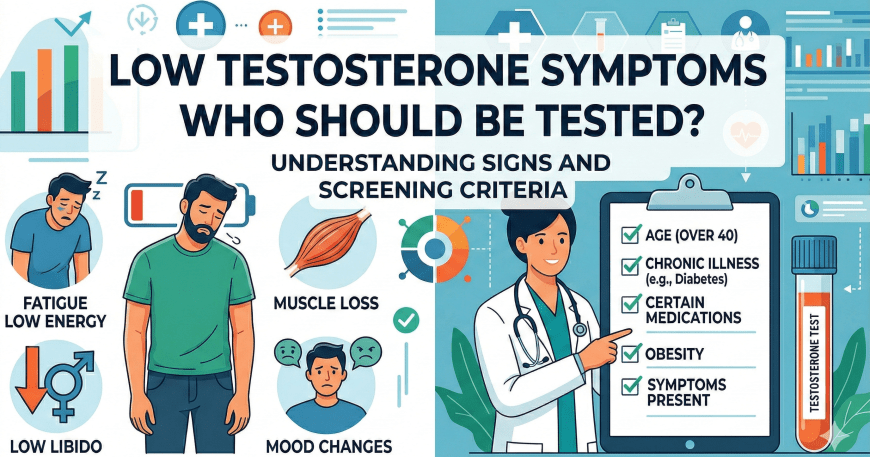
Low Testosterone Symptoms: Who Should Be Tested?

Testosterone is a key hormone in male health—far beyond sexual desire alone. It influences energy levels, muscle and bone integrity, mood, sleep quality, and metabolic health. While testosterone may decline gradually with age, in some men the decrease becomes clinically significant and leads to noticeable symptoms. So, what are the symptoms of low testosterone, and who should have testosterone levels measured?
Below is a medically appropriate, evidence-aligned overview of the most common clinical features and the patient groups in whom testing is most relevant.
What is low testosterone?
Low testosterone (male hypogonadism) is defined by consistently reduced serum testosterone levels together with compatible clinical symptoms and/or signs. A single “low” lab value does not automatically indicate a need for treatment. The diagnosis relies on the combination of symptoms + biochemical confirmation, typically with repeat morning testing.
Most common symptoms of low testosterone
Clinical presentation can vary widely. Some men have mild symptoms, while others experience a significant impact on daily functioning.
1) Sexual symptoms
Reduced sexual desire (low libido)
Reduced erectile quality
Decrease in morning erections
Reduced sexual satisfaction and performance
Note: Erectile dysfunction is multifactorial. Vascular disease, diabetes, hypertension, psychological stress, medications, and lifestyle factors may also contribute.
2) Energy and physical performance
Persistent fatigue, reduced stamina
Reduced exercise tolerance
Low motivation, decreased drive
Daytime sleepiness
3) Changes in body composition and muscle strength
Decreased muscle mass and strength
Increased central (abdominal) adiposity
Difficulty losing weight despite lifestyle efforts
4) Mood and cognitive symptoms
Low mood, depressive symptoms
Irritability, reduced stress tolerance
Difficulty concentrating (“brain fog”)
Reduced self-confidence
5) Sleep and general health
Poor sleep quality
Night sweats (non-specific, but may be reported)
Long-term tendency toward reduced bone density
6) Reproductive and endocrine clues
Infertility evaluation (especially at younger ages)
Subjective or objective testicular volume loss
Gynecomastia (increase in breast tissue)
Who is at higher risk of low testosterone?
The likelihood of low testosterone is higher in men with certain clinical profiles and comorbidities:
Men over 40 with relevant symptoms
Obesity, particularly increased waist circumference
Type 2 diabetes / insulin resistance / metabolic syndrome
Obstructive sleep apnea
Chronic systemic disease (e.g., chronic kidney disease, COPD)
Chronic stress, depression, or long-term sleep deprivation
Long-term opioid therapy and certain medications affecting the hypothalamic–pituitary–gonadal axis
History of testicular trauma, mumps orchitis, or chemotherapy/radiotherapy
Men undergoing infertility work-up
Who should be tested?
Testosterone testing is most appropriate in men with consistent symptoms and/or those in recognized higher-risk groups.
Strong indications for measuring testosterone
Testing is clinically meaningful when one or more of the following are present:
Marked decrease in libido plus reduced morning erections
Deterioration in erectile quality (especially after other causes are considered)
Unexplained, persistent fatigue with reduced strength and performance
Central weight gain with reduced physical capacity
Depressive symptoms or reduced motivation accompanied by physical/sexual symptoms
Infertility evaluation
Suspected osteoporosis or low-trauma fractures
Is testing “just out of curiosity” useful?
In the absence of symptoms, routine testing is often not necessary. Testosterone shows diurnal variation, and isolated measurements can be misleading. A symptom- and risk-based assessment is generally more clinically appropriate.
How and when should testosterone be measured?
Proper timing and confirmation are essential:
Testosterone is ideally measured in the morning (commonly between 08:00 and 11:00).
If the result is low, repeat testing on a different day is typically recommended to confirm.
Depending on the clinical scenario, additional tests may include free testosterone, SHBG, LH/FSH, and prolactin.
Acute illness, sleep deprivation, heavy exercise, and severe stress can transiently lower measured testosterone.
Conditions that can mimic low testosterone
Several common conditions may produce similar symptoms, so differential diagnosis matters:
Hypothyroidism
Vitamin D deficiency
Anemia
Depression and anxiety disorders
Obstructive sleep apnea
Medication adverse effects
Diabetes and vascular disease
For this reason, a “testosterone-only” approach is not appropriate. The goal is to identify underlying contributors and tailor management accordingly.
When to see a urologist
A urology assessment is advisable when any of the following are present:
Significant libido reduction and decreased erectile quality
Persistent fatigue with reduced muscle strength or performance
Infertility or difficulty conceiving
Testicular volume changes or gynecomastia
Sexual symptoms in the context of obesity, diabetes, or metabolic syndrome
The purpose of evaluation is not only to confirm whether testosterone is low, but also to clarify the cause and establish a safe, individualized plan.
Take-home message
Low testosterone can present with sexual, physical, and psychological symptoms. The most reliable approach is a structured clinical assessment followed by properly timed morning testing and biochemical confirmation, especially in symptomatic men or those with clear risk factors.